
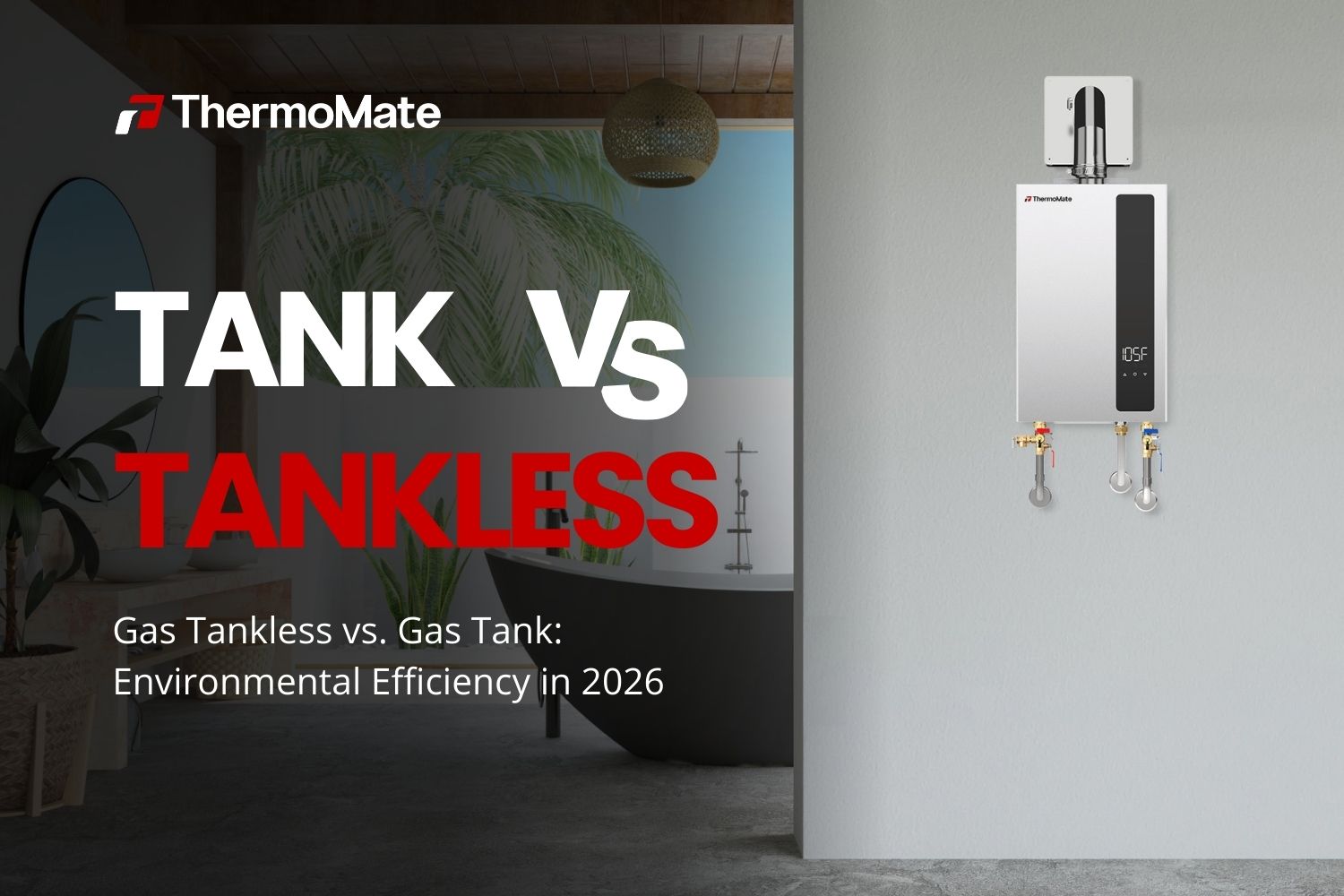
Gas Tankless vs. Gas Tank: Environmental Efficiency in 2026
In the United States, gas water heaters remain a dominant choice for residential hot water. However, as energy efficiency standards tighten and homeowners become more cost- and environmentally conscious, a critical question continues to arise in 2026:
If you plan to stay with natural gas, is an indoor gas tankless water heater a more environmentally responsible choice than a traditional gas tank water heater?
This article provides a clear, technically grounded comparison to help homeowners, builders, and contractors make an informed decision.
Executive Summary
When comparing gas to gas, indoor gas tankless water heaters are measurably more energy-efficient and environmentally favorable than traditional gas tank water heaters in 2026.
The primary reasons are:
-
Significantly reduced standby energy losses
-
Higher thermal efficiency
-
Lower gas consumption per gallon of hot water delivered
-
Longer service life and reduced material waste over time
How Traditional Gas Tank Water Heaters Consume Energy
Gas tank water heaters operate on a storage-and-maintain model:
-
Water is heated and stored in an insulated tank
-
The burner cycles on and off to maintain temperature 24/7
-
Heat is continuously lost through the tank walls and flue
Key Limitations
-
Standby heat loss occurs even when no hot water is used
-
Typical Energy Factor (EF) ranges from 0.60 to 0.70
-
Energy waste is unavoidable due to stored hot water
As a result, a significant portion of natural gas is consumed without directly contributing to usable hot water.
How Indoor Gas Tankless Water Heaters Improve Efficiency
Indoor gas tankless water heaters operate on an on-demand heating principle:
-
Water is heated only when a hot water tap is opened
-
No storage tank means no continuous reheating
-
Advanced combustion and heat exchangers maximize energy transfer
Efficiency Advantages
-
No standby energy losses
-
Typical Uniform Energy Factor (UEF) of 0.82–0.95
-
Higher efficiency per BTU of gas consumed
This directly translates into less fuel burned for the same hot water demand.
Environmental Impact: Gas Tank vs. Gas Tankless
Both systems use natural gas, but the environmental impact per gallon of hot water differs significantly.
Gas Tank Water Heater
-
Continuous burner cycling
-
Higher cumulative gas usage
-
Increased CO₂ emissions over time
Indoor Gas Tankless Water Heater
-
Precise combustion tied to actual demand
-
Reduced total gas consumption
-
Lower emissions per delivered unit of hot water
Result:
Gas tankless systems reduce unnecessary fuel use and associated emissions by eliminating idle operation.
Ventilation and Indoor Installation Considerations
Modern indoor gas tankless water heaters are designed with:
-
Sealed combustion chambers
-
Direct vent or power vent systems
-
Strict compliance with U.S. safety and emissions standards
While both systems require proper venting, tankless units typically operate with cleaner, more controlled combustion, improving overall system efficiency when correctly installed.
Regulatory and Market Trends in the U.S. (2026 Outlook)
Although natural gas remains widely used, regulatory direction increasingly favors higher-efficiency gas appliances:
-
Updated DOE efficiency standards prioritize high-UEF equipment
-
Many utility programs encourage upgrading from tank to tankless
-
Builders increasingly specify tankless gas units to meet efficiency benchmarks
In this context, traditional gas tank heaters are becoming less future-proof, while tankless systems align more closely with long-term efficiency requirements.
| Category | Gas Tank Water Heater | Indoor Gas Tankless |
|---|---|---|
| Typical Efficiency | 60–70% | 82–95% |
| Standby Energy Loss | High | None |
| Gas Use per Gallon | Higher | Lower |
| Hot Water Supply | Limited | Continuous |
| Expected Lifespan | 8–12 years | 15–20 years |
| Environmental Impact | Moderate–High | Lower |
Longer lifespan means fewer replacements, less material waste, and reduced manufacturing impact over time.
Who Should Consider Upgrading to Gas Tankless?
Indoor gas tankless water heaters are particularly well-suited for:
-
Medium to large households
-
Homes with high or variable hot water demand
-
Owners planning long-term occupancy
-
Customers seeking lower lifetime gas consumption without switching fuel types
Final Conclusion
In 2026, when evaluating gas water heating options exclusively, indoor gas tankless water heaters represent the more eco-efficient and forward-looking solution.
They do not eliminate emissions entirely, but they:
-
Minimize unnecessary gas usage
-
Improve thermal efficiency
-
Reduce long-term environmental impact compared to gas tank systems
For homeowners committed to natural gas, tankless technology is the most responsible evolution of gas water heating available today.