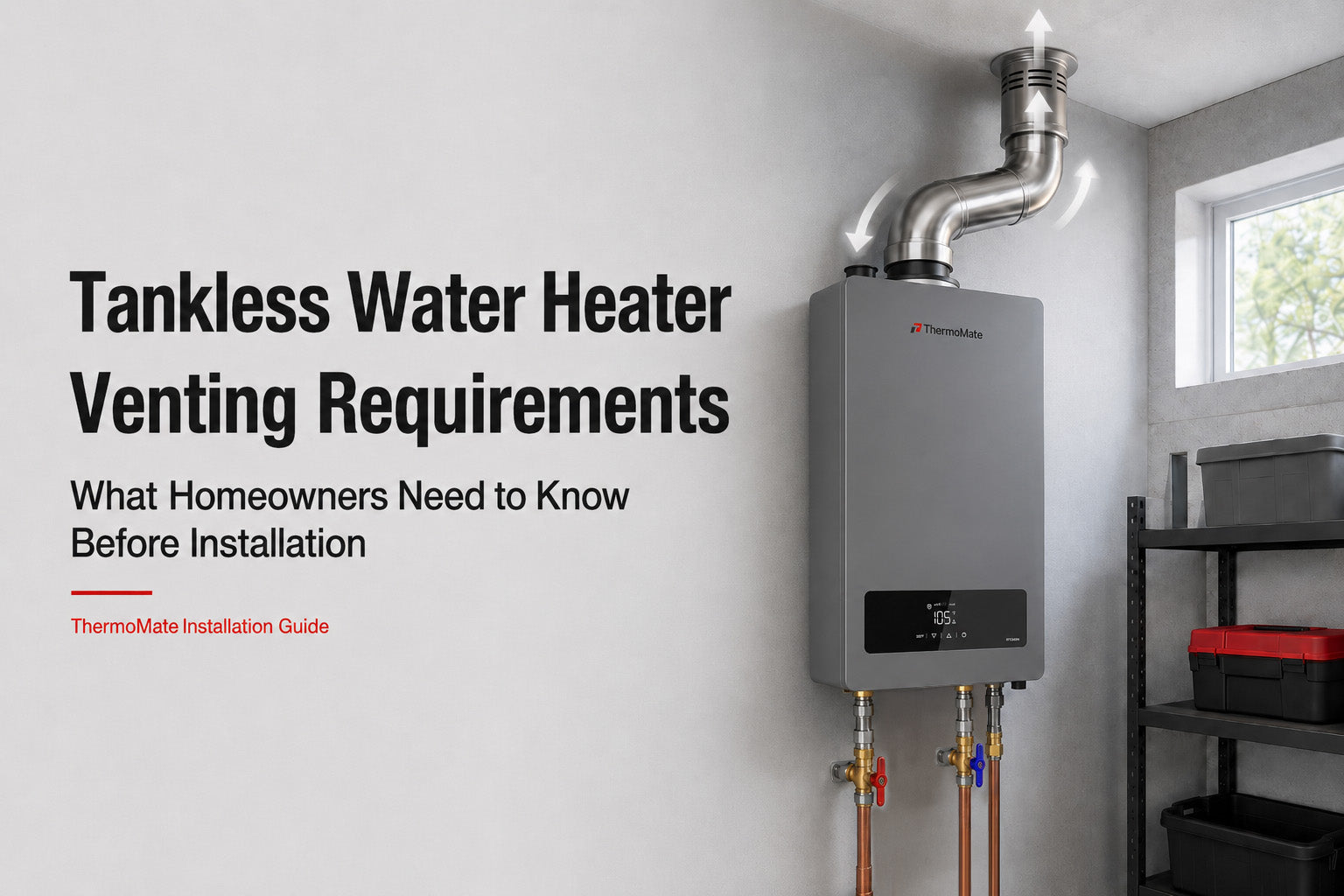
Tankless Water Heater Venting Requirements Explained
Tankless water heaters are known for providing hot water on demand, saving space, and improving everyday home comfort. But if you are planning to install an indoor gas tankless water heater, one of the most important things to understand is venting.
Tankless water heater venting requirements are not just installation details. They are essential safety rules that help remove combustion exhaust, protect indoor air quality, support stable heater performance, and reduce the risk of carbon monoxide buildup.
In this guide, we’ll explain how tankless water heater venting works, the main types of venting systems, common vent materials, installation considerations, and what homeowners should check before choosing a gas tankless water heater.
Why Tankless Water Heater Venting Matters
Gas tankless water heaters use either natural gas or propane to heat water. During combustion, the unit produces exhaust gases that must be safely discharged outdoors.
Proper venting helps:
- Remove combustion gases from your home
- Reduce the risk of carbon monoxide exposure
- Support stable burner performance
- Protect the heater from improper combustion or overheating
- Help the installation meet local building and fuel gas code requirements
If the venting system is too long, poorly sloped, undersized, made from the wrong material, or terminated in the wrong location, the water heater may not operate correctly. In serious cases, improper venting can create unsafe conditions inside the home.
That is why indoor gas tankless water heaters should always be installed according to the product manual, local building codes, and by a qualified professional.
If you are comparing fuel options, ThermoMate offers both propane gas tankless water heaters and natural gas tankless water heaters for different home layouts, fuel sources, and hot water needs.
Do All Tankless Water Heaters Need Venting?
No. Venting requirements depend on the type of tankless water heater you choose.
Gas Tankless Water Heaters
Indoor gas tankless water heaters require venting because natural gas and propane combustion produces exhaust gases that must be directed outdoors.
This applies to:
- Indoor propane tankless water heaters
- Indoor natural gas tankless water heaters
- Condensing gas tankless water heaters
- Non-condensing gas tankless water heaters
Outdoor gas models may not require the same indoor vent pipe system, but they still need proper outdoor placement, clearances, gas connection, and freeze protection where required.
Electric Tankless Water Heaters
Electric tankless water heaters do not burn fuel, so they do not need combustion venting. However, they still require proper electrical service, breaker sizing, wire sizing, and professional electrical installation.
If your home does not have a practical venting path for a gas unit, you may want to compare electric tankless water heaters as an alternative.
Main Types of Tankless Water Heater Venting

The right venting setup depends on the heater design, installation location, fuel type, local code, and manufacturer requirements. Below are the most common venting types used for gas tankless water heaters.
1. Direct Vent
A direct vent system brings combustion air from outdoors and sends exhaust gases back outdoors through a sealed venting system.
Direct vent setups are common for indoor gas tankless water heaters because they do not rely only on indoor air for combustion. This can be especially helpful in tighter homes, utility rooms, basements, closets, and mechanical rooms where indoor combustion air may be limited.
Direct vent systems may use:
- Two separate pipes: one for air intake and one for exhaust
- A concentric vent system: one pipe assembly that handles both intake and exhaust through separate channels
Direct venting is often preferred because it helps isolate the combustion process from the living space.
2. Power Vent
A power vent system uses a fan or blower to push exhaust gases outdoors. This may allow more flexible vent routing, including horizontal venting through a side wall, depending on the model.
However, a power vent unit may still need adequate combustion air from the installation space unless it is also designed as a direct vent system.
Always check whether the heater requires:
- Exhaust vent only
- Separate combustion air intake
- Minimum room volume
- Louvers or additional combustion air openings
- Dedicated vent materials
3. Concentric Vent
A concentric vent combines air intake and exhaust in one wall or roof penetration. This can simplify installation because it reduces the number of exterior openings.
In many systems, exhaust travels through the inner pipe while fresh combustion air enters through the outer channel. This design can create a cleaner exterior appearance and may help when wall space is limited.
Not every tankless water heater supports concentric venting, so only use a concentric vent kit approved for your specific model.
4. Vertical Venting
Vertical venting sends exhaust upward through the roof. This type of venting may be used when the heater is installed in a basement, utility room, garage, or interior mechanical space where side-wall venting is not practical.
Vertical venting requires careful planning around:
- Vent length
- Number of elbows
- Roof termination
- Condensate drainage
- Pipe support
- Clearances from roof openings and air intakes
5. Horizontal Venting
Horizontal venting sends exhaust through an exterior wall. Many modern tankless water heaters support side-wall venting, but requirements vary by model.
Horizontal venting may be convenient when the heater is mounted near an outside wall. However, the termination point must be placed safely away from windows, doors, fresh air intakes, corners, soffits, decks, walkways, gas meters, and other building features as required by the manual and local code.
Condensing vs. Non-Condensing Venting Requirements
One of the biggest factors in tankless water heater venting is whether the unit is condensing or non-condensing.
Non-Condensing Tankless Water Heaters
Non-condensing gas tankless water heaters usually release hotter exhaust. Because of that, they often require high-temperature vent materials such as stainless steel vent pipe or other manufacturer-approved materials.
Common considerations include:
- Higher exhaust temperature
- Proper vent slope
- Correct vent diameter
- Manufacturer-approved pipe and fittings
- Proper wall or roof termination
- Avoiding unapproved plastic vent materials
You should never assume that existing venting from an old tank water heater can be reused. Tankless systems often have different venting temperatures, pressure characteristics, and manufacturer requirements.
Condensing Tankless Water Heaters
Condensing tankless water heaters capture more heat from combustion exhaust before venting. This can make the exhaust cooler and may allow certain approved plastic vent materials, such as PVC, CPVC, or polypropylene, depending on the model and local code.
However, condensing units also create condensate that must be drained properly. That means installation may involve:
- Approved vent piping
- Correct pipe slope
- Condensate drain routing
- Condensate neutralizer where required
- Freeze protection in cold climates
- Proper termination clearances
ThermoMate’s gas tankless water heater collection includes options for different residential hot water needs. Before choosing a model, always review the venting requirements in the installation manual.
Key Tankless Water Heater Venting Requirements to Check

Every model is different, but most indoor gas tankless water heater installations require careful attention to the following points.
1. Use Only Approved Vent Materials
The vent material must match the water heater type and the manufacturer’s instructions.
Depending on the unit, approved materials may include:
- Stainless steel vent pipe
- PVC
- CPVC
- Polypropylene
- Manufacturer-specific vent kits
Do not use dryer vent, flexible duct, unapproved plastic pipe, or old galvanized venting unless it is specifically approved for the heater. Using the wrong vent material can affect performance and safety.
2. Follow Maximum Vent Length Limits
Tankless water heaters have maximum vent length limits. These limits usually depend on:
- Pipe diameter
- Number of elbows
- Vertical or horizontal routing
- Intake and exhaust configuration
- Model-specific blower capacity
Every elbow adds resistance, which can reduce the allowable total vent length. A vent run that is too long may cause ignition problems, error codes, poor combustion, or shutdowns.
3. Maintain Proper Vent Slope
Many vent systems require a specific slope so condensate can drain correctly. This is especially important for condensing gas tankless water heaters.
Incorrect slope can allow moisture to collect inside the vent, which may damage components, restrict airflow, or affect performance.
4. Place the Vent Termination Correctly
The exterior vent termination must be positioned safely. It should not discharge exhaust into areas where gases can re-enter the home.
Avoid placing terminations too close to:
- Operable windows
- Doors
- Fresh air intakes
- Dryer vents
- Gas regulators
- Corners
- Decks
- Public walkways
- Soffits
- Neighboring structures
Exact clearance distances depend on the heater model, vent type, local code, and installation location.
5. Provide Combustion Air When Required
Some systems pull combustion air directly from outdoors. Others may use indoor air from the installation space. If a unit depends on indoor combustion air, the room must be large enough or have proper air openings.
Insufficient combustion air can cause poor performance, flame instability, shutdowns, or unsafe combustion conditions.
6. Avoid Common Venting Unless Approved
Do not connect a tankless water heater to an existing shared chimney or common vent unless the installation manual and local code specifically allow it.
Many modern tankless units require dedicated venting. Reusing old tank-style water heater venting is one of the most common installation mistakes.
7. Install Carbon Monoxide Alarms
Any home with gas appliances should have properly installed carbon monoxide alarms. They should be placed and maintained according to local requirements and alarm manufacturer instructions.
Carbon monoxide alarms are not a substitute for correct venting, but they are an important safety layer.
Can You Vent a Tankless Water Heater Through a Wall?
Yes, many indoor gas tankless water heaters can be vented horizontally through an exterior wall if the model is designed for that type of installation.
Side-wall venting can be a practical option when the heater is mounted near an exterior wall, such as in a garage, basement, laundry room, or utility space.
However, wall venting must still follow:
- Approved vent material requirements
- Maximum vent length limits
- Correct pipe slope
- Proper termination clearances
- Local building code
- Product manual instructions
Never cut a wall opening or route a vent based only on a general online guide. The specific heater manual should be the primary reference.
Can You Vent a Tankless Water Heater Through the Roof?
Yes, roof venting may be allowed for certain tankless water heaters. Vertical roof venting is often used when side-wall venting is not possible.
Roof venting may require:
- Approved vertical vent pipe
- Roof flashing
- Proper termination height
- Weather protection
- Pipe support
- Condensate management
- Safe clearance from other roof penetrations
Because roof penetrations can create water leak risks if done incorrectly, this type of installation should be handled by a qualified installer.
Indoor vs. Outdoor Tankless Water Heater Venting
Choosing between indoor and outdoor installation can affect venting requirements.
Indoor Installation
Indoor tankless gas water heaters require a designed venting system to move exhaust outdoors. They may also require combustion air intake depending on the model.
Indoor units are commonly installed in:
- Garages
- Basements
- Utility rooms
- Mechanical rooms
- Laundry rooms
- Interior walls with proper vent routing
Outdoor Installation
Outdoor tankless gas water heaters are designed to operate outside and discharge exhaust into open air. They do not use the same indoor vent pipe system, but they still need:
- Correct outdoor clearances
- Weather-appropriate installation
- Freeze protection where required
- Proper gas and water connections
- Protection from extreme exposure if recommended by the manual
For many homeowners, the right choice depends on climate, local code, wall space, fuel type, and service access.
Tankless Water Heater Venting Checklist Before Installation
Before installing an indoor gas tankless water heater, review this checklist:
- Confirm whether the unit is indoor or outdoor rated
- Confirm whether it is propane or natural gas
- Check whether it is condensing or non-condensing
- Read the installation manual before purchasing vent materials
- Confirm approved vent pipe type and diameter
- Measure the planned vent route
- Count elbows and compare with maximum vent length
- Plan intake and exhaust termination locations
- Verify clearances from windows, doors, intakes, and walkways
- Confirm combustion air requirements
- Plan condensate drainage if using a condensing unit
- Check local permit and inspection requirements
- Hire a qualified professional for gas and venting work
If you are still comparing fuel types, read ThermoMate’s guide on propane vs natural gas tankless water heaters to understand which option may fit your home better.
Common Tankless Water Heater Venting Mistakes
Using the Wrong Vent Material
A vent pipe that is not rated for the heater’s exhaust temperature can create serious safety and durability problems.
Reusing Old Tank Water Heater Venting
Traditional tank-style water heaters and tankless water heaters often have different venting requirements. Existing venting should not be reused unless it is approved for the new unit.
Exceeding Vent Length Limits
Too many elbows or a vent run that is too long can restrict airflow and affect combustion.
Poor Termination Location
Exhaust should not be able to re-enter the home through windows, doors, vents, or air intakes.
Ignoring Condensate Drainage
Condensing models need proper condensate handling. Skipping this step can damage the unit or vent system.
DIY Gas Installation Without Proper Training
Gas line sizing, combustion air, venting, and code compliance are not areas to guess. Professional installation is strongly recommended.
Choosing the Right ThermoMate Tankless Water Heater
Venting is only one part of choosing the right water heater. You should also consider:
- Fuel type: propane, natural gas, or electric
- Indoor vs. outdoor installation
- GPM flow rate
- Number of bathrooms
- Simultaneous fixture use
- Groundwater temperature
- Available gas line capacity
- Electrical requirements
- Maintenance access
ThermoMate offers a wide range of tankless water heaters, including electric, propane, and natural gas options for different home sizes and installation scenarios.
For gas-connected homes, a natural gas tankless water heater may be a strong whole-home option. For cabins, tiny homes, rural properties, and off-grid setups, a propane tankless water heater may offer more flexibility.
If your installation location does not support gas venting, an electric tankless water heater may be easier to place because it does not require combustion exhaust venting.
FAQ: Tankless Water Heater Venting Requirements
What are the basic tankless water heater venting requirements?
Basic tankless water heater venting requirements include using manufacturer-approved vent materials, following maximum vent length limits, maintaining proper slope, placing the vent termination safely outdoors, providing combustion air when required, and complying with local building codes.
Does a propane tankless water heater need venting?
Yes. Indoor propane tankless water heaters require proper venting because propane combustion produces exhaust gases that must be safely directed outdoors.
Does a natural gas tankless water heater need venting?
Yes. Indoor natural gas tankless water heaters require venting to remove combustion exhaust from the home. The exact venting system depends on the model, vent type, installation location, and local code.
Can a tankless water heater be vented horizontally?
Many gas tankless water heaters can be vented horizontally through a side wall, but only if the model supports that configuration. Always follow the product manual for approved materials, vent length, slope, and termination clearances.
Can I use PVC to vent a tankless water heater?
Some condensing tankless water heaters may allow PVC, CPVC, or polypropylene venting, depending on the model and local code. Non-condensing units often require stainless steel or other high-temperature approved venting. Always check the manual before buying vent materials.
Can I reuse my old water heater vent?
Usually, you should not assume that an old tank water heater vent can be reused for a tankless model. Tankless water heaters often have different venting temperatures, pressure requirements, and material requirements. A professional installer should verify compatibility.
Do electric tankless water heaters need venting?
No. Electric tankless water heaters do not burn gas, so they do not need combustion venting. However, they still require correct electrical installation.
Should I install a gas tankless water heater myself?
Gas tankless water heater installation involves gas supply, water connections, venting, combustion air, condensate management, and local code compliance. For safety and warranty protection, professional installation is strongly recommended.
Final Thoughts
Understanding tankless water heater venting requirements is essential before choosing an indoor gas tankless water heater. The right venting system helps protect your home, supports efficient performance, and ensures combustion gases are safely exhausted outdoors.
Before installation, always review the product manual, confirm local code requirements, and work with a qualified professional. If your home supports proper venting, a ThermoMate gas tankless water heater can be a space-saving, on-demand hot water solution for everyday comfort.
Explore ThermoMate’s full range of tankless water heaters to compare electric, propane, and natural gas options for your home.