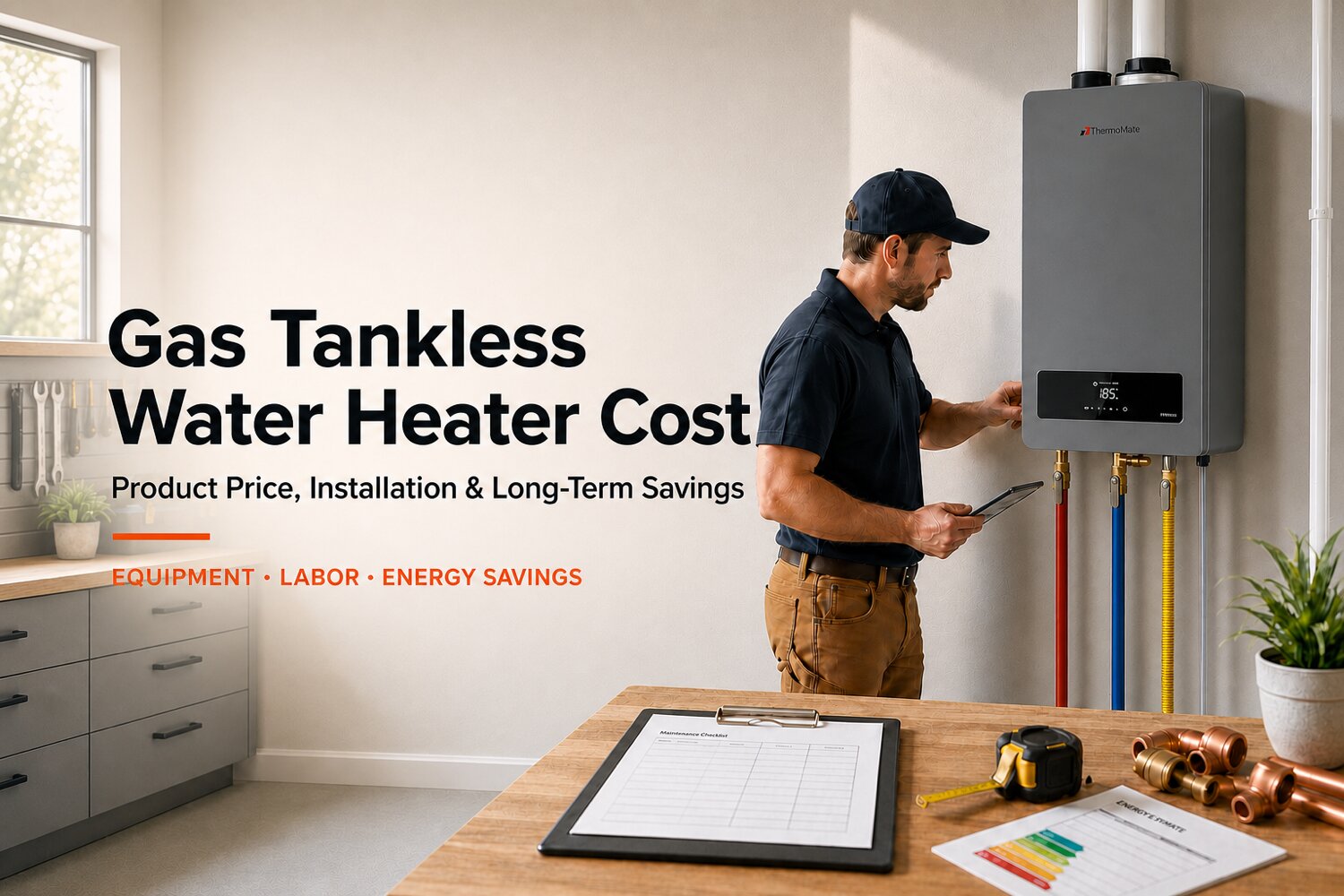
Gas Tankless Water Heater Cost: Product, Installation, and Long-Term Savings
How much does a gas tankless water heater cost? The equipment itself may cost a few hundred dollars for a compact residential model or more than $1,000 for a high-capacity condensing system. However, the final installed price also depends on labor, gas-line capacity, venting, electrical access, permits, and the condition of your existing plumbing.
For a straightforward replacement, homeowners may spend approximately $1,400 to $3,900 on a tankless water heater project. A more complicated tank-to-tankless conversion involving new gas lines, venting, electrical work, or condensate drainage can reach roughly $2,200 to $5,600 or more. These figures are planning estimates rather than contractor quotes because local labor rates and home conditions vary considerably.
This guide explains the product price, installation expenses, maintenance needs, and potential long-term savings so you can build a more realistic budget before choosing a natural gas tankless water heater or a propane tankless water heater.
Average Gas Tankless Water Heater Cost at a Glance
| Cost Category | Typical Planning Range | What Affects the Price |
|---|---|---|
| Gas tankless water heater | $300–$2,000+ | GPM, BTU output, efficiency, condensing design, controls |
| Professional labor | $600–$2,500 | Replacement type, installation time, access and local labor rates |
| Gas-line work | $260–$1,500+ | Line size, distance from meter, pressure and total appliance load |
| Venting materials and installation | $100–$800+ | Condensing versus non-condensing unit, vent length and exit location |
| 120V power connection | $0–$1,000 | Whether a suitable outlet or circuit already exists |
| Permit and inspection | $25–$300 | Local code requirements and project scope |
| Old water heater removal | $100–$500 | Unit size, accessibility and local disposal fees |
| Condensate drain | $0–$300 | Required for condensing models when drainage is not already available |
These expenses are not automatically included in every installer’s estimate. Ask for an itemized written quote showing the unit, labor, venting, gas-line work, electrical work, permits, disposal, valves, installation accessories, and condensate management separately.
How Much Does the Gas Tankless Water Heater Itself Cost?
The product usually represents only part of the total tankless gas water heater cost. Equipment prices increase as flow rate, heating capacity, efficiency, and simultaneous-use capability increase.
At the time of writing in July 2026, ThermoMate’s residential natural gas lineup provides examples across several price and capacity levels:
| ThermoMate Model | Current Product Price* | Maximum Flow Rate | Suggested Application |
|---|---|---|---|
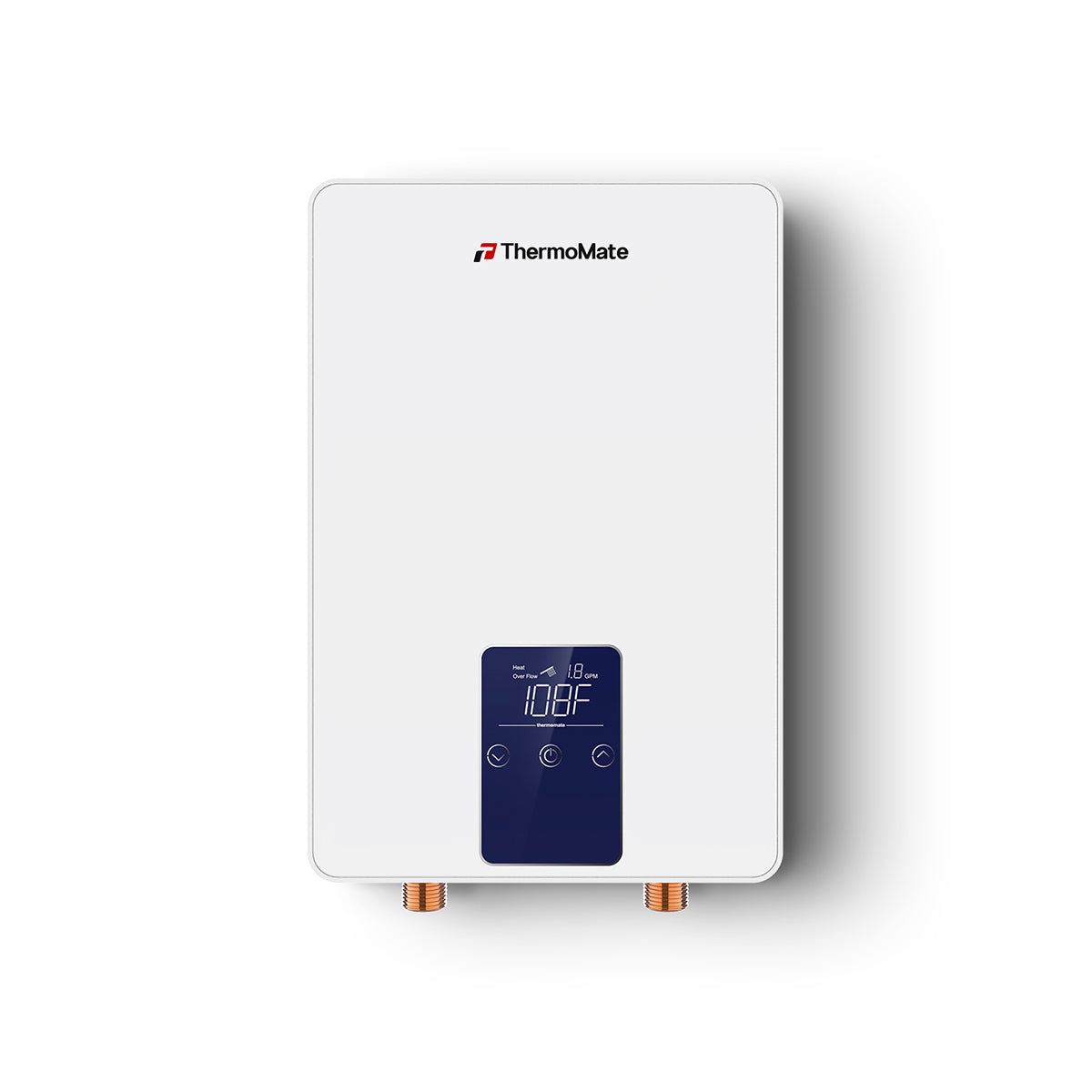
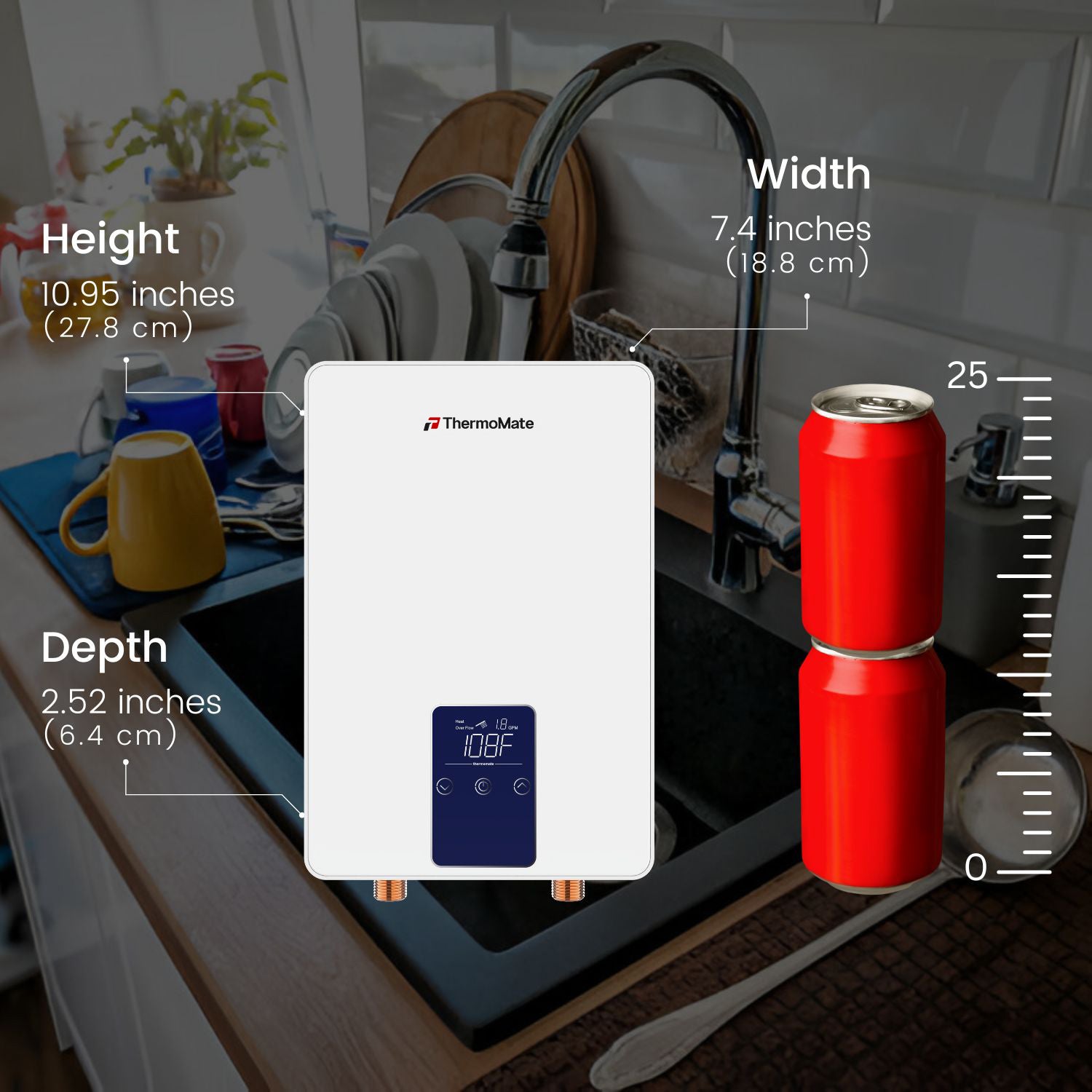
| CZ264NG Natural Gas Tankless Water Heater | $299.99 | 2.9 GPM | Smaller homes and approximately 1–2 fixtures |
| CZ422NG Natural Gas Tankless Water Heater | $399.99 | 4.4 GPM | Medium-demand homes and approximately 2–3 fixtures |
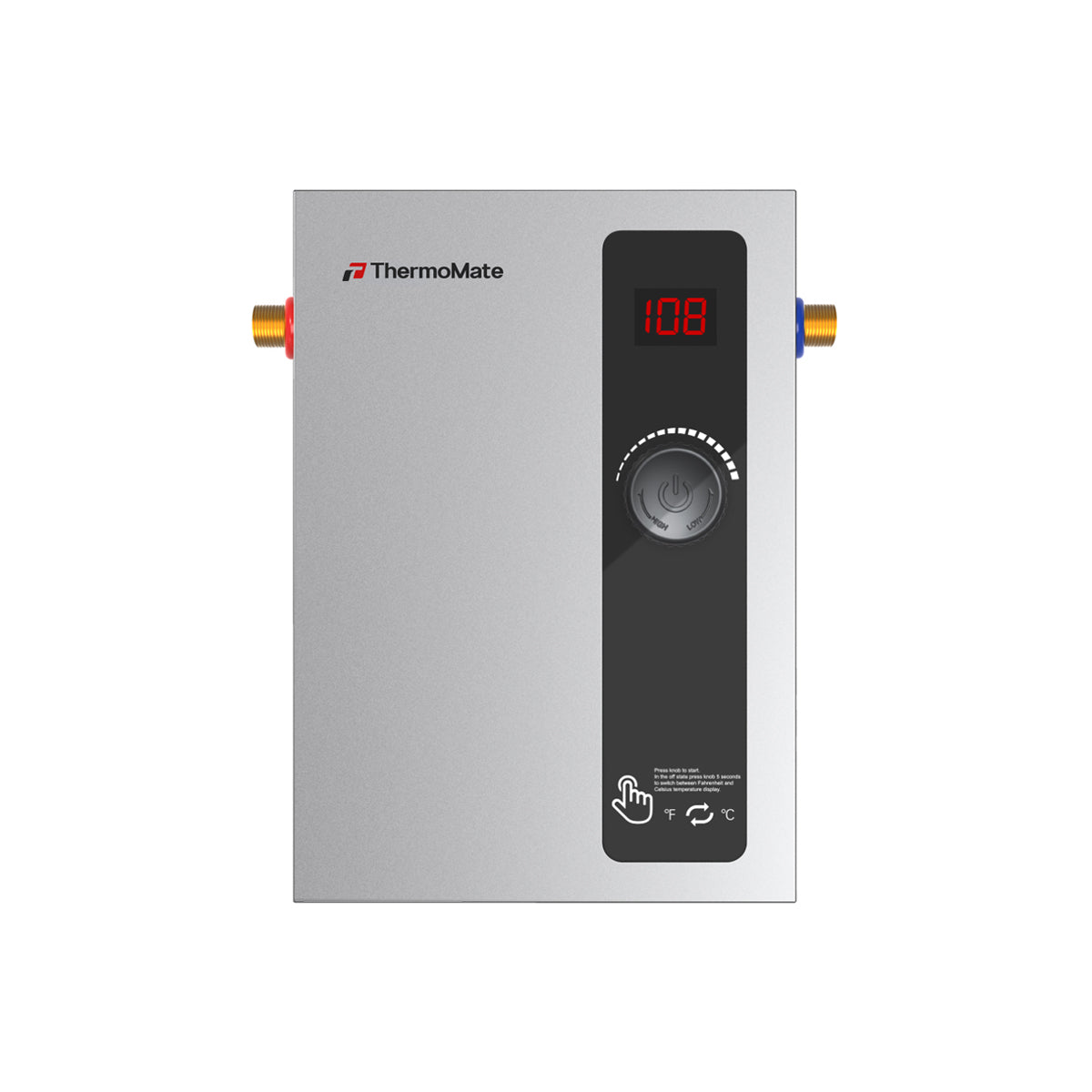
| CZ480 Condensing Natural Gas Tankless Water Heater | $559.99 | 5.28 GPM | Busy households using approximately 3–4 fixtures |
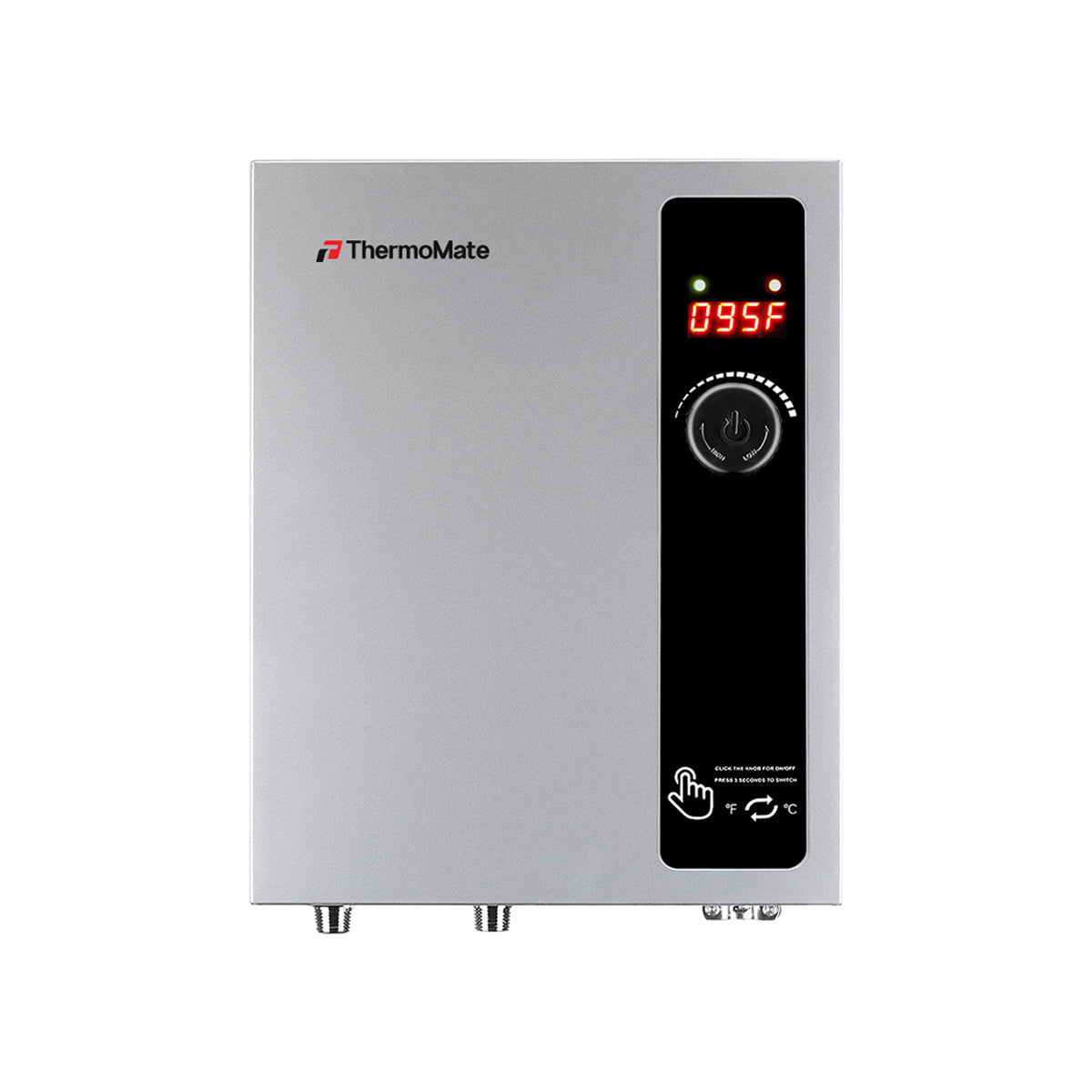
| RTC68iN Whole-House Condensing Tankless Water Heater | $1,099.99 | Up to 9.38 GPM | Larger homes with several simultaneous hot-water demands |
*Prices are shown for general comparison and may change with promotions, inventory, or product updates.
The 2.9 GPM model delivers up to 75,000 BTU and is designed for approximately one or two fixtures. The 4.4 GPM model provides up to 113,000 BTU and can serve approximately two or three fixtures. ThermoMate’s 5.28 GPM condensing model provides 114,000 BTU with a listed 0.86 UEF, while the larger RTC68iN provides up to 9.38 GPM, 163,000 BTU, and a listed 0.91 UEF. Actual flow depends on incoming water temperature, selected outlet temperature, water pressure, and simultaneous demand.
Buying the lowest-priced model is not always the least expensive decision. An undersized heater may reduce water flow or struggle when several fixtures operate together. An oversized model may increase the equipment price and could require more extensive gas-line work. Use ThermoMate’s water heater buying guide to estimate the appropriate capacity before requesting installation quotes.

What Determines Gas Tankless Water Heater Installation Cost?
1. Like-for-Like Replacement or Tank-to-Tankless Conversion
Replacing an existing gas tankless heater is generally the least complicated option because the mounting location, fuel supply, water connections, power outlet, and vent route may already be suitable.
Converting from a storage tank to a tankless system usually costs more. The installer may need to relocate plumbing, mount the new unit, increase gas-line capacity, replace the venting system, add an electrical outlet, and remove the old tank. Labor for a tankless replacement may range from approximately $600 to $1,900, while a more extensive conversion or retrofit can move toward $2,500 in labor alone.
2. Existing Gas-Line Capacity
A gas tankless heater can require substantially more peak BTU input than a conventional storage heater. The installer must evaluate the line diameter, total run length, gas pressure, meter capacity, and other appliances connected to the same supply.
If the existing line is too small, upgrading or installing a new gas line can add hundreds or even more than $1,000 to the project. The cost is usually lowest when the unit is installed near an adequately sized existing supply and highest when a new line must be run from the meter or propane regulator.
3. Venting Requirements
Gas water heaters must safely exhaust combustion gases. The required vent material and configuration depend on the specific model, exhaust temperature, manufacturer instructions, local codes, and installation location.
Many non-condensing systems require specialized high-temperature venting. Condensing models recover more heat from the exhaust and may support lower-cost vent materials when specifically approved by the manufacturer. For example, the ThermoMate RTC68iN is listed as compatible with PVC venting, although the complete system must still follow its installation manual and local code.
Learn more about the system’s combustion and exhaust process in How a Gas Tankless Water Heater Works.
4. Condensate Drainage
A condensing gas tankless water heater produces condensate as it recovers heat from the exhaust. The installation may therefore require a drain line and, depending on the plumbing materials and local requirements, a condensate neutralizer.
Condensate work is usually inexpensive when a suitable drain is located nearby. Running a new drain across a finished room or installing a condensate pump can increase the project cost.
5. Electrical Access
Although the water is heated with natural gas or propane, most modern gas tankless systems still require 120V power for electronic ignition, controls, sensors, freeze protection, and the ventilation fan.
If an appropriate outlet already exists, this part of the cost may be minimal. Adding a new outlet or dedicated circuit can require an electrician and may add approximately $200 to $1,000, depending on distance and accessibility.
6. Permits, Inspections, and Local Codes
Gas, plumbing, venting, and electrical modifications may require permits and inspections. Permit costs often fall between approximately $25 and $300, although requirements vary by city and project scope. A qualified installer should understand local codes and identify whether the estimate includes permit applications and inspection coordination.
7. Installation Location
A clear utility-room wall near existing plumbing and an exterior vent location is generally less expensive than a tight attic, finished closet, crawlspace, or distant mechanical room.
Relocating the system can increase costs because the installer may need to extend water lines, fuel piping, power, drainage, and venting. Keeping the new heater close to the current mechanical connections is one of the most effective ways to control the total installation budget.
Three Example Installation Budgets
The following examples are planning scenarios rather than guaranteed prices.
Scenario 1: Existing Tankless Heater Replacement
- Residential gas tankless heater: $300–$1,100
- Standard installation labor: $600–$1,500
- Minor fittings, permit, and disposal: $150–$500
- Estimated project total: approximately $1,050–$3,100
This is the most favorable situation because the installer may be able to reuse the existing gas line, vent location, water connections, and power outlet.
Scenario 2: Gas Storage Tank to Tankless Conversion
- Gas tankless heater: $400–$1,500
- Installation labor: $1,200–$2,000
- Gas-line and venting modifications: $500–$1,500
- Electrical, permit, and removal: $250–$800
- Estimated project total: approximately $2,350–$5,800
The final amount depends heavily on whether the existing gas service can support the new unit and how easily the exhaust can be routed outdoors.
Scenario 3: Large Condensing Whole-House Installation
- High-capacity condensing heater: $900–$2,000+
- Professional installation: $1,200–$2,500
- Gas-line upgrade: $350–$2,000
- Venting, condensate drainage, power, and permits: $300–$1,300
- Estimated project total: approximately $2,750–$7,800+
This type of project may be appropriate for homes with multiple bathrooms and frequent simultaneous use. Before selecting a large system, review ThermoMate’s guide to the best gas tankless water heater for large families.
Natural Gas vs. Propane Tankless Water Heater Cost
Natural gas and propane models have similar installation requirements, including combustion venting, water connections, power, and professional commissioning. The main cost differences usually come from fuel availability and supply infrastructure.
A natural gas system is often economical when the home already has suitable utility gas service. Propane may be practical for rural, remote, or off-grid properties, but the project may require an outdoor storage tank, regulator, delivery service, and properly sized propane piping.
Natural gas and propane heaters are fuel-specific. A homeowner should purchase the correct model for the available fuel rather than assuming that an appliance can be converted after purchase.

How Much Can a Gas Tankless Water Heater Save?
Tankless water heaters heat water when it is requested instead of continuously maintaining a stored supply. This avoids the standby heat loss associated with storage tanks.
According to the U.S. Department of Energy, demand water heaters can be approximately 24%–34% more energy efficient than conventional storage water heaters in homes using 41 gallons or less of hot water per day. In high-use homes consuming around 86 gallons daily, the efficiency improvement may be closer to 8%–14%. Actual utility savings depend on fuel prices, hot-water use, system efficiency, incoming water temperature, and maintenance.
A Simple Savings Example
Suppose your existing gas storage water heater costs approximately $600 per year to operate:
- At 10% savings, the annual reduction would be approximately $60.
- At 20% savings, the annual reduction would be approximately $120.
- At 30% savings, the annual reduction would be approximately $180.
If switching to tankless costs $1,200 more than installing another storage heater and saves $120 per year, the simple payback period would be approximately 10 years:
Payback period = Additional upfront cost ÷ Annual utility savings
$1,200 ÷ $120 = 10 years
This simplified example does not include maintenance, repairs, financing, changing fuel prices, rebates, or differences in equipment lifespan. Use your actual utility rate and estimated annual hot-water consumption for a more useful calculation.
Equipment Lifespan and Replacement Savings
Long-term value is not limited to monthly fuel savings. The Department of Energy states that most tankless water heaters have a life expectancy of more than 20 years, while conventional storage water heaters commonly last approximately 10–15 years. Tankless systems also contain replaceable components that may extend service life when the unit is installed and maintained correctly.
A longer service life can reduce the likelihood that a homeowner will need to purchase and install two storage water heaters during the operating life of one tankless system. However, water quality, usage, installation quality, freeze exposure, and maintenance all influence actual longevity.
Maintenance Costs to Include in Your Budget
A gas tankless heater does not eliminate maintenance. Mineral scale can collect inside the heat exchanger, particularly in hard-water areas, reducing heat transfer and restricting water flow.
Maintenance requirements depend on water hardness, household usage, installation conditions, and the manufacturer’s instructions. Periodic flushing, filter cleaning, vent inspection, burner inspection, and verification of the condensate system can help maintain efficiency and extend equipment life. The Department of Energy recommends periodic maintenance and following the product manual for model-specific procedures.
Review five signs that it is time to descale your tankless water heater to identify common performance symptoms before they develop into larger problems.
How to Reduce the Cost of Switching to a Tankless Water Heater
Choose the Correct GPM
Tankless systems are sized according to flow rate and required temperature rise, not tank capacity. Add the expected flow rates of fixtures that may operate simultaneously and account for the difference between incoming groundwater temperature and desired outlet temperature.
ENERGY STAR notes that common household fixtures may require approximately 2.5 GPM for a shower, 2.2 GPM for a sink, 1.3 GPM for a dishwasher, and 3.3 GPM for a clothes washer. Actual fixtures vary, so check their ratings before sizing the heater.
Smaller homes may not need the cost of a high-output system. Read the ThermoMate guide to choosing a gas tankless water heater for apartments, condos, and small homes.
Keep the Same Fuel Type
Switching from an existing gas storage heater to a gas tankless system is generally less complicated than converting an all-electric home to gas. Adding new gas service can significantly increase the total project cost.
Keep the Existing Installation Area
Installing the new heater near the existing gas, water, power, and vent connections can reduce material and labor expenses. Relocating the unit should deliver a clear practical benefit before the additional cost is accepted.
Request an On-Site Assessment
An online product price cannot reveal whether the home needs a larger gas line, new vent route, drain connection, electrical outlet, pressure regulator, or plumbing repairs. An on-site assessment provides a more reliable total than a quote based only on the water heater model.
Compare Itemized Quotes
Ask at least two qualified installers to separate the equipment, labor, gas piping, venting, electrical, permits, disposal, valves, condensate components, and warranty coverage. A low initial quote may become expensive if major requirements are added later as change orders.
Consider Condensing Venting Advantages
A condensing model may cost more than a basic non-condensing heater, but its lower exhaust temperature may allow less expensive vent materials when approved by the manufacturer and local code. It can also recover more exhaust heat, potentially lowering fuel consumption.
Check Local Rebates Before Buying
Some utilities and local programs offer incentives for qualifying high-efficiency gas water heaters. Availability and eligibility vary by location, model, efficiency level, installation date, and program funding. Confirm the requirements before purchasing rather than assuming that every tankless heater qualifies. ENERGY STAR provides a rebate finder for certified products.

Is a Gas Tankless Water Heater Worth the Cost?
A gas tankless water heater may provide strong long-term value when:
- The home already has natural gas or propane service.
- The existing fuel line can support the required BTU input.
- The household regularly needs continuous hot water.
- Several fixtures may operate during busy periods.
- The homeowner expects to remain in the property long enough to benefit from energy savings and longer equipment life.
- Wall space is preferable to the footprint of a storage tank.
The investment may be less attractive when the project requires completely new gas service, extensive structural work, a long vent route, or major plumbing relocation. It may also be difficult to recover the upfront premium when the home uses very little hot water or will be sold soon.
For a direct comparison of the two system types, read Gas Tankless vs. Tank Water Heaters.
Frequently Asked Questions
How much does a gas tankless water heater cost with installation?
A straightforward replacement may cost approximately $1,400–$3,900. A more extensive tank-to-tankless conversion or whole-house retrofit can cost approximately $2,200–$5,600 or more when it requires new gas piping, venting, electrical work, drainage, permits, or plumbing modifications.
Why is gas tankless water heater installation expensive?
The heater must be connected to correctly sized water and fuel lines, safely vented outdoors, supplied with electrical power, mounted securely, tested, and installed according to manufacturer instructions and local codes. Converting from a storage tank can require several new systems rather than a simple appliance replacement.
Does a gas tankless water heater need electricity?
Most modern gas tankless heaters require 120V electricity for ignition, controls, sensors, the internal fan, and certain protection functions. The burner uses natural gas or propane, but the control system still depends on electrical power.
Does a condensing tankless water heater cost more to install?
A condensing model requires condensate drainage, which can add installation work. However, approved lower-temperature vent materials may reduce venting expenses compared with some non-condensing installations. The net difference depends on the vent path and access to a suitable drain.
How long does it take for a gas tankless water heater to pay for itself?
There is no universal payback period. Divide the additional upfront cost compared with your alternative system by the expected annual energy savings. Homes with higher hot-water costs, an easy installation, and long-term occupancy generally have a better opportunity to recover the upfront premium.
Can I install a gas tankless water heater myself?
Gas appliance installation involves fuel piping, combustion venting, plumbing, electrical connections, carbon monoxide safety, permits, and local building codes. The Department of Energy recommends using a qualified plumbing and heating contractor for proper installation.
Final Thoughts
The total gas tankless water heater cost includes much more than the price shown on the product page. Equipment capacity, fuel-line size, venting, electrical access, condensate drainage, permits, labor, and installation location can all change the final amount.
Start by calculating your required GPM and temperature rise. Then select a correctly sized system and request an on-site, itemized installation estimate. This approach helps prevent both overspending on unnecessary capacity and paying later to correct an undersized or improperly planned installation.
Explore ThermoMate’s full range of natural gas tankless water heaters, compare compact and high-capacity models, and choose a solution that balances initial cost, household hot-water demand, installation complexity, and long-term efficiency.